Vase Explainer
A mobile object-interpretation demo showing how a guided digital layer can help someone understand an artefact, artwork or display object in context.
Overview
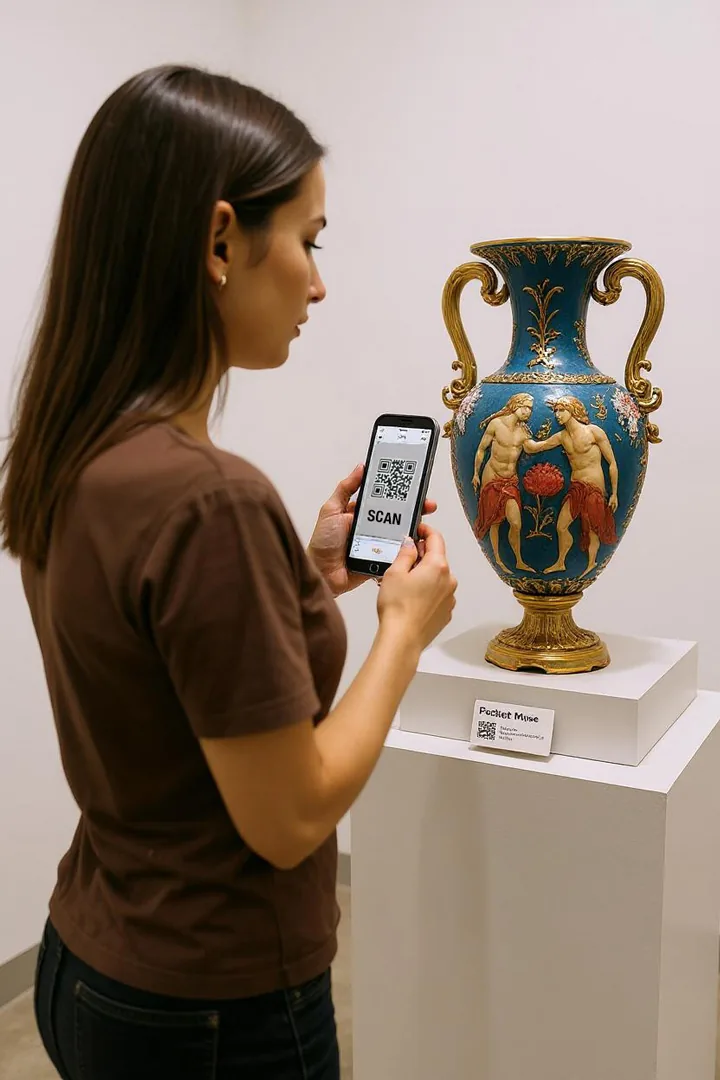
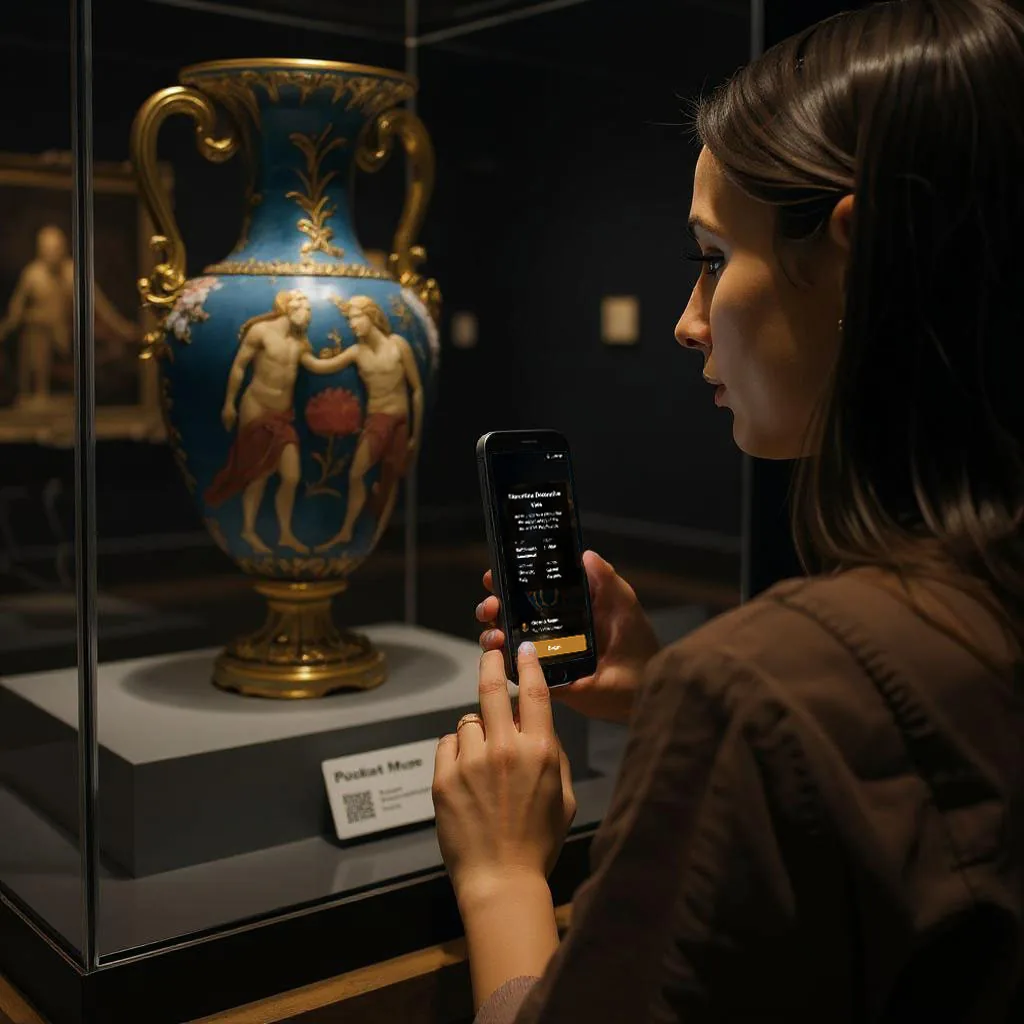
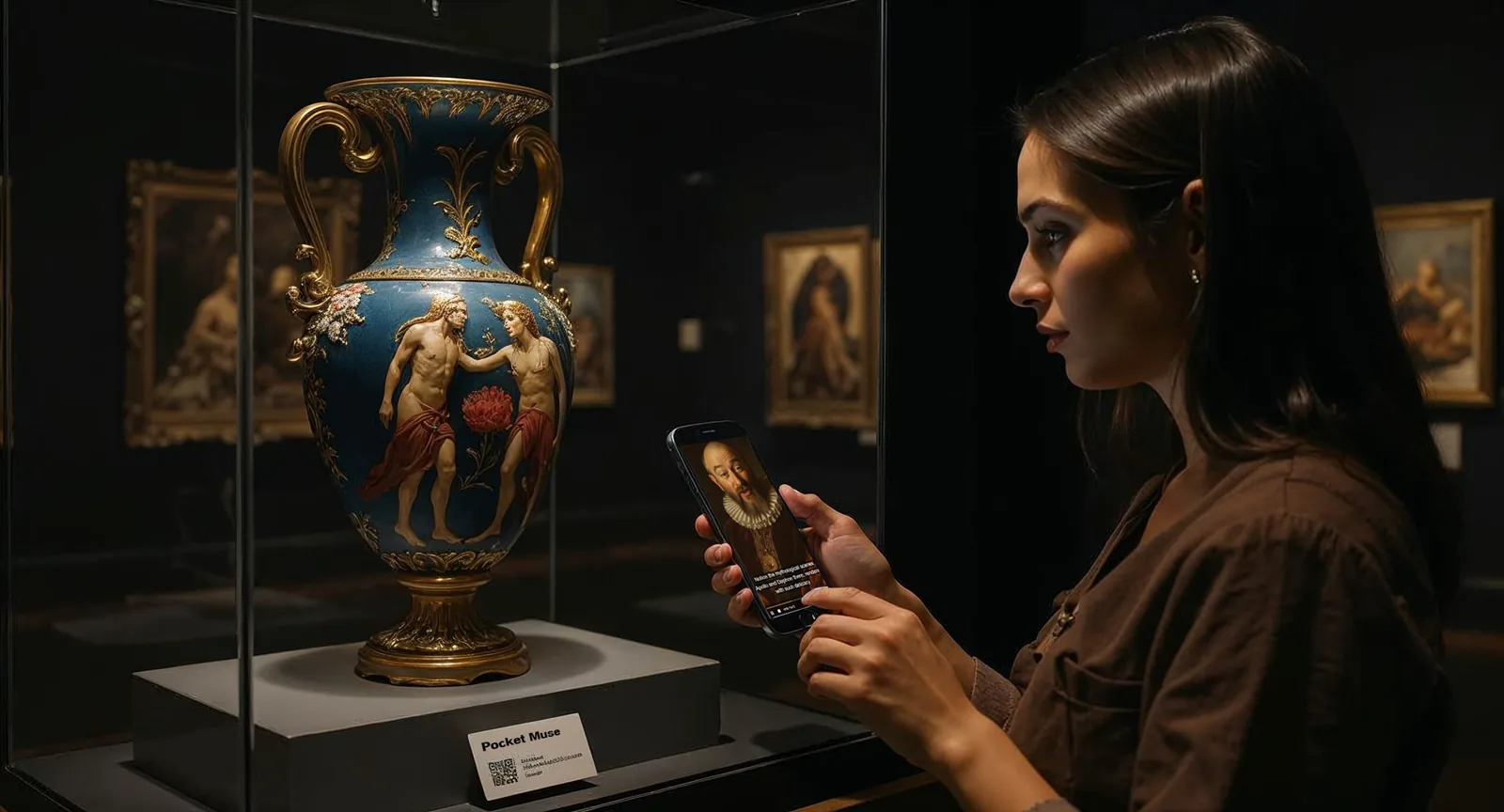
The Vase Explainer was created as an internal demo for object interpretation. It explores how a digital layer could sit beside a museum object, artwork, artefact or display and help a visitor understand what they are looking at.
Rather than sending someone to a general information page, the experience is focused on a specific moment: a person encounters an object and wants a clearer way into its story, context or meaning.
Challenge
Objects in museums, galleries and exhibitions often carry more meaning than can fit on a small label. A visitor may want more context, but a long wall of text can interrupt the experience or overwhelm the object itself.
The challenge was to create a lightweight guided explanation that could add depth without replacing the physical display. The digital layer needed to support curiosity in the moment, not turn the visit into a heavy website experience.
The experience
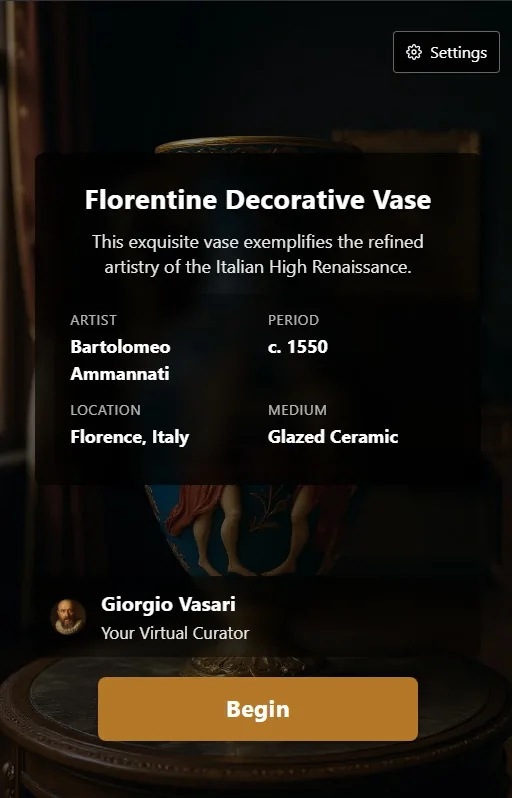
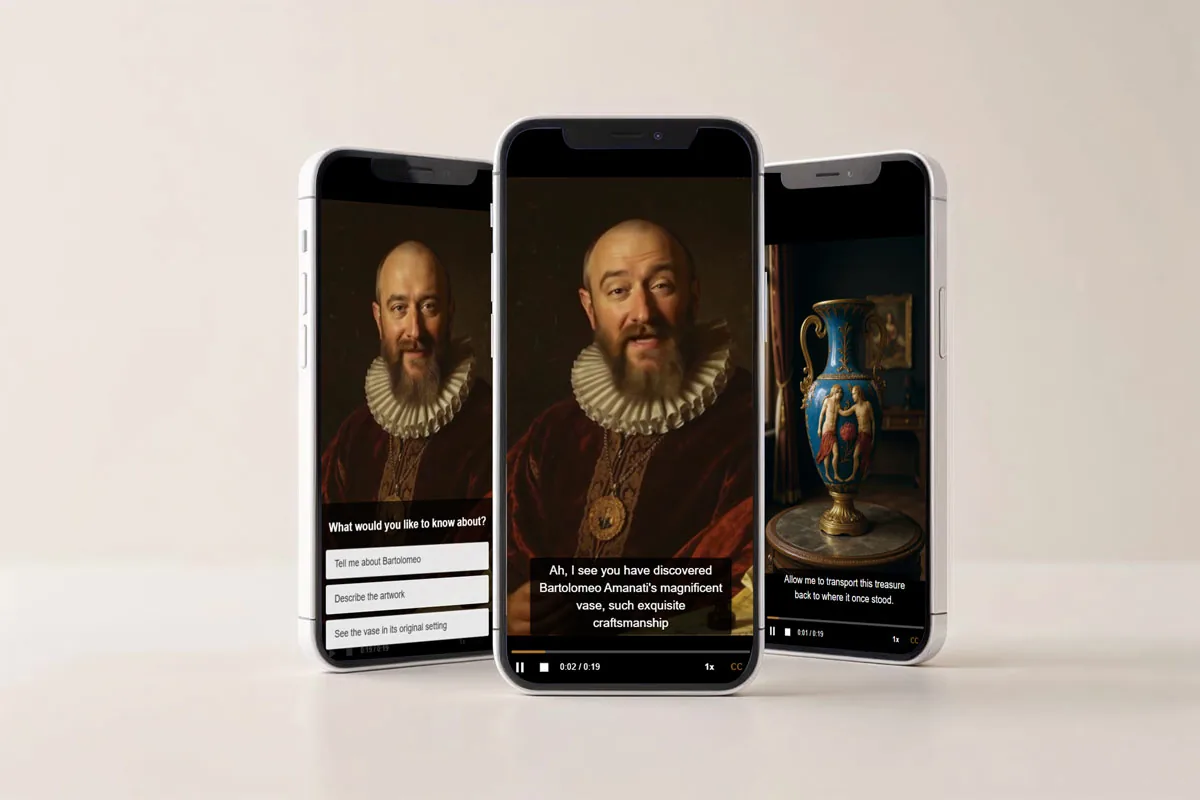
The demo presents the object through a guided mobile flow. A visitor can be introduced to the object, receive a short explanation, follow prompts or questions, and move through supporting context at their own pace.
The interaction is designed to feel closer to a guided interpretation than a database entry. The aim is to make the object easier to understand while keeping the visitor anchored in the physical setting.
What I designed and implemented
- Object-focused interpretation flow
- Mobile-first guided explanation
- Character / host-style explanation pattern
- Short-form content structure
- Contextual prompts and supporting details
- Interface and interaction design
- Front-end implementation
- Reusable pattern for museum, gallery and display objects
What this shows
This demo shows how guided digital layers can work at a very small scale: one object, one visitor and one moment of curiosity. The same approach used for larger walkthroughs can also support focused interpretation around a single artefact, artwork or display item.
The Vase Explainer tested the smallest version of the approach: one object, one visitor and one moment of curiosity. It did not need to be an AR app or a full museum guide; the useful layer was a short, structured mobile explanation.
It also helped clarify how a digital guide can add context without asking the visitor to leave the physical experience.
Relevance now
The Vase Explainer helped shape the current practice by testing how a guided mobile layer could support object-based interpretation. It sits between a label, an audio guide and a conversational explainer: short enough to use in the moment, but structured enough to provide more depth than a static sign.
This pattern is relevant to museums, galleries, heritage sites, exhibitions, visitor centres and any display environment where the physical object benefits from additional context.
Project Images