Skullduggery at Old Government House
A research-led AR adventure-game prototype exploring how casual visitors could understand the intangible cultural heritage of Old Government House through site-specific storytelling.
Published in ACM Journal on Computing and Cultural Heritage
Bringing Empty Rooms to Life for Casual Visitors Using an AR Adventure Game: Skullduggery at Old Government House
Overview
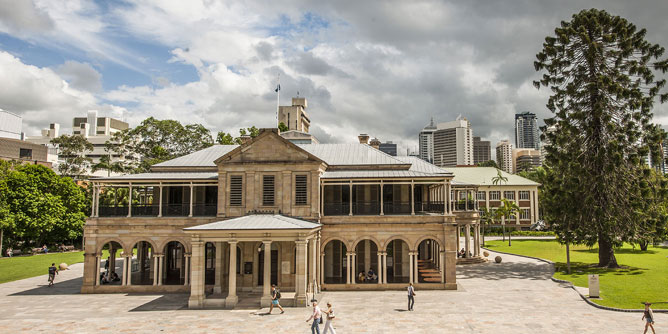
Skullduggery at Old Government House was my honours research project and the foundation for much of my later work in place-based digital experience. The project explored how a mobile AR adventure-game structure could help casual visitors understand the intangible cultural heritage of a historic place.
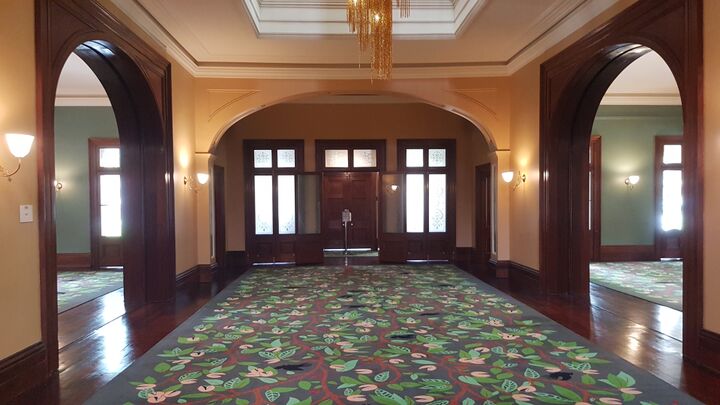
Old Government House presented a clear experience problem: much of the building's significance was not visible to casual visitors. Rooms could feel empty or disconnected from the history they carried. The project asked whether story, movement, theatrical framing and mobile AR could help bring those spaces to life.
Challenge
Casual visitors often move through heritage sites without joining a formal tour or reading large amounts of interpretive text. At Old Government House, this meant visitors could see the physical rooms but miss much of the social, political and cultural history attached to them.
The challenge was to create an experience that could work in the actual site, give visitors a reason to move through the rooms, and help them feel the significance of the place without relying only on signs, brochures or wall text.
The experience
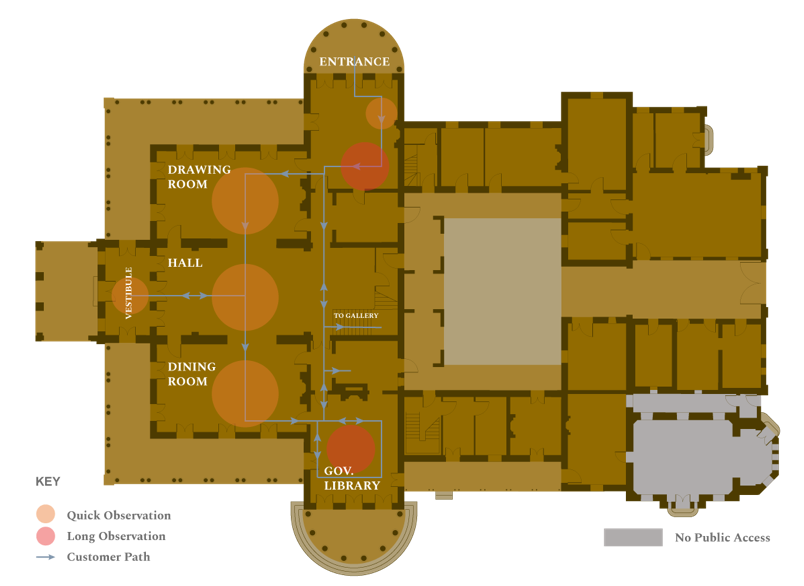
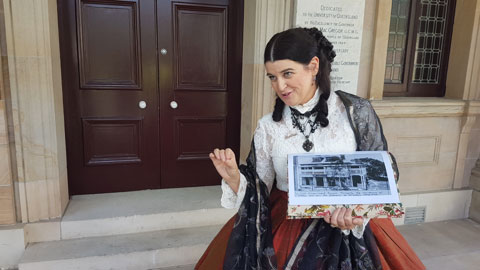
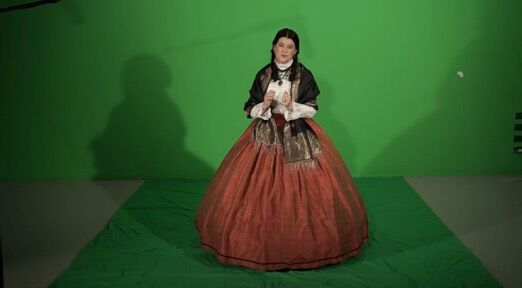
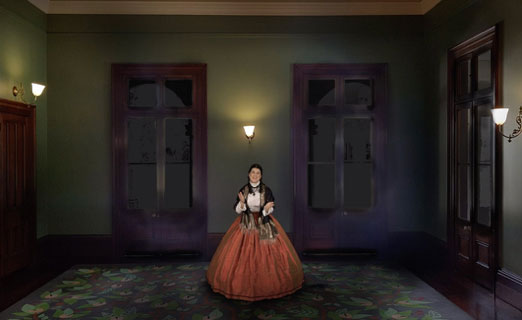
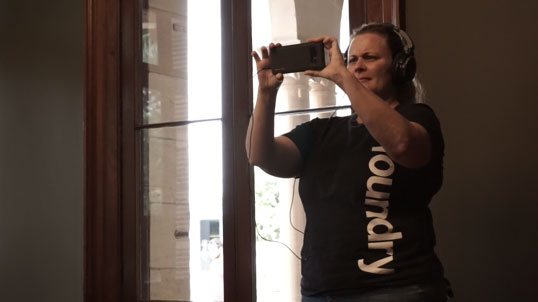
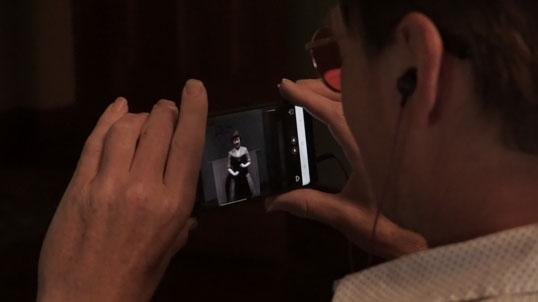
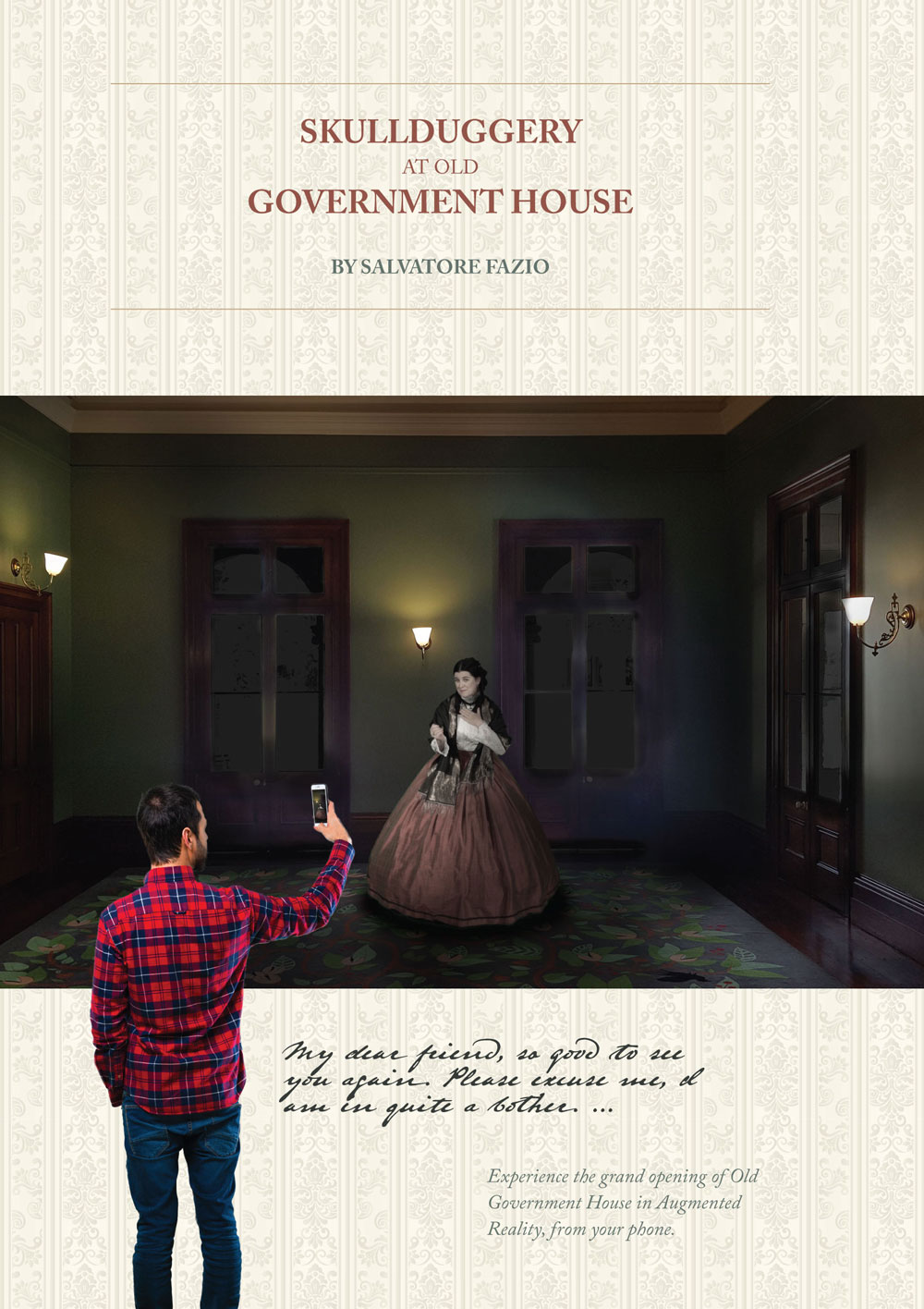
The prototype used a site-specific theatrical structure. Visitors moved through Old Government House with a mobile device, encountering AR-triggered scenes connected to different rooms.
The experience was inspired by heritage tours, theatre, adventure games, locative media and audio storytelling. Instead of presenting history as a static information layer, it gave visitors a role, a sequence of clues and a reason to explore the space.
Research and testing
The project included research into the site, visitor experience, intangible cultural heritage, locative media and AR interaction. It also involved prototyping and user testing inside the building.
The resulting paper, Bringing Empty Rooms to Life for Casual Visitors Using an AR Adventure Game: Skullduggery at Old Government House, was published in ACM Journal on Computing and Cultural Heritage. It reported on the project as an AR adventure-game approach to bringing empty rooms to life for casual visitors.
Presenting the experience
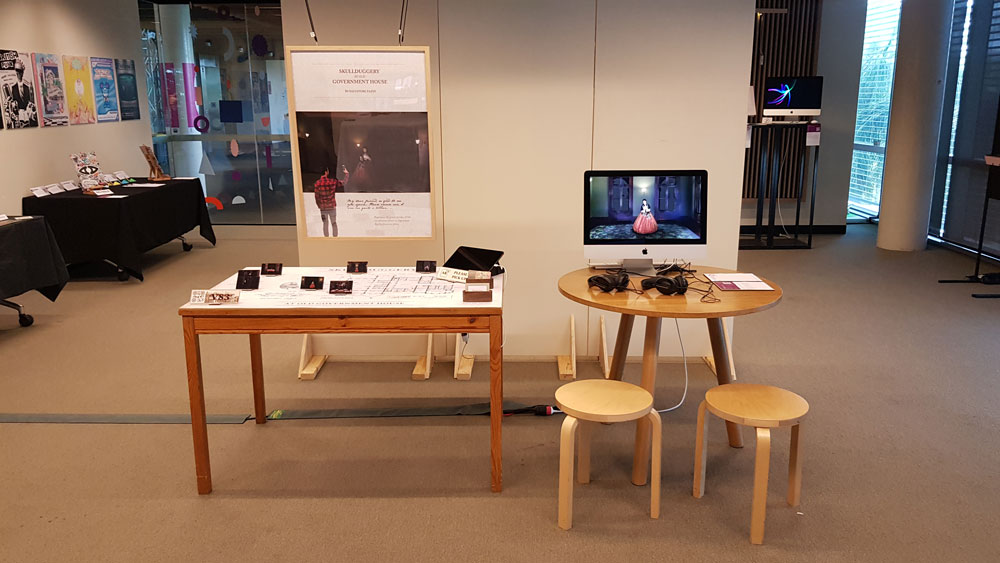
To explain the experience outside the building, I also created a physical exhibition display for the project. Because the AR prototype was site-specific, the display needed to help people understand how the experience worked without actually walking through Old Government House.
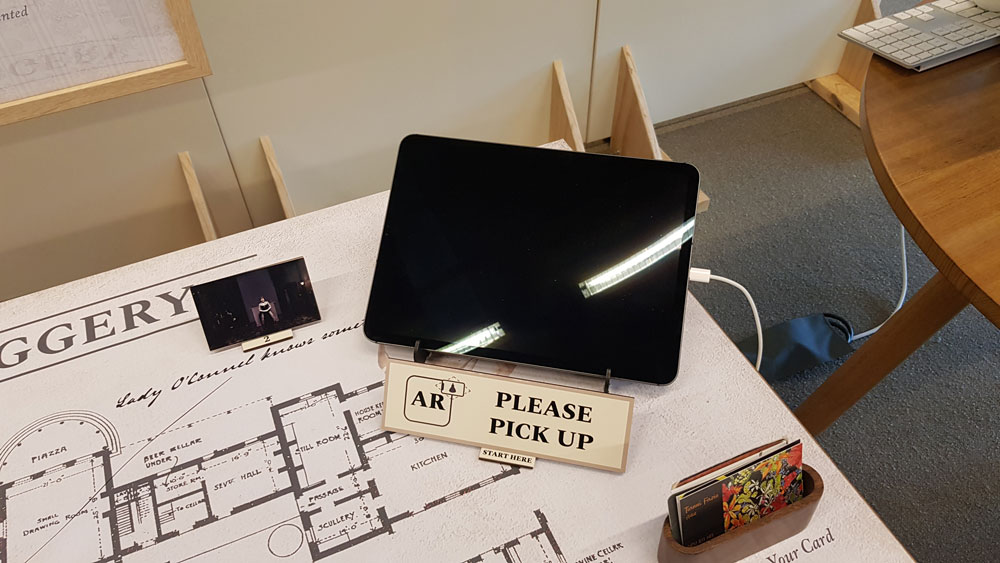
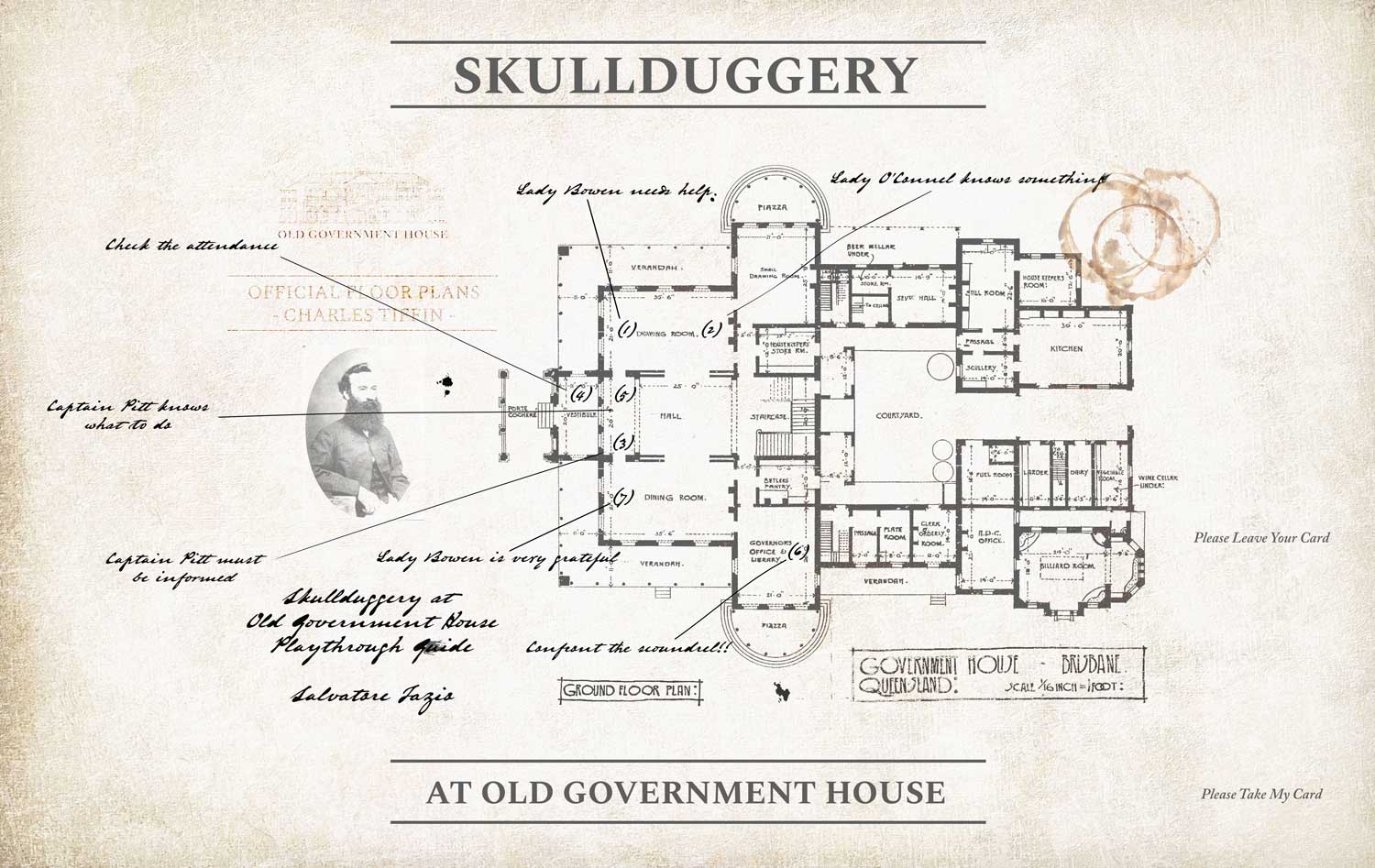
The display used a floor plan of Old Government House, scene markers, physical objects and an iPad. Visitors could point the iPad at scenes on the display to trigger video previews of moments from the AR experience. This turned the presentation itself into a small physical/digital explanation of the larger project.
What I designed
- Research into Old Government House and visitor experience
- Site-specific AR experience concept
- Theatrical adventure-game structure
- Visitor journey and room-based flow
- Story and interaction design
- Prototype development
- On-site testing
- Interpretation strategy for intangible cultural heritage
- Presentation of the experience through physical and digital materials
What this shows
Skullduggery shows the deeper origin of my current practice. The project was not about using AR for novelty; it was about asking what kind of digital layer could help someone understand a physical place more clearly.
It established a pattern that still sits behind my work: start with the place, the visitor and the thing that is difficult to understand, then design the digital layer around that moment.
This presentation component is also relevant to my current practice. It was an early example of designing a guided explanation around an experience: helping people understand an unfamiliar physical/digital interaction by moving through a smaller, structured version of it.
Connection to Old Government House AR Tours
Skullduggery later informed the funded Old Government House AR Tours project. The delivered tour moved in a different direction, becoming a fuller AR interpretation experience with recreated historical context, 3D environments, wayfinding and curator-style guidance.
Together, the two projects show the movement from research prototype to delivered place-based digital experience.
Relevance now
This project remains important because it clarified the core question that continues through my work: how can digital experience help people understand places, stories and complex ideas by giving them structure, context and interaction?
The current work is often lighter and more web-based than this early AR prototype, but the principle is the same. Digital should support the visitor's understanding of the real place, not become the point of the experience.
Project Images